
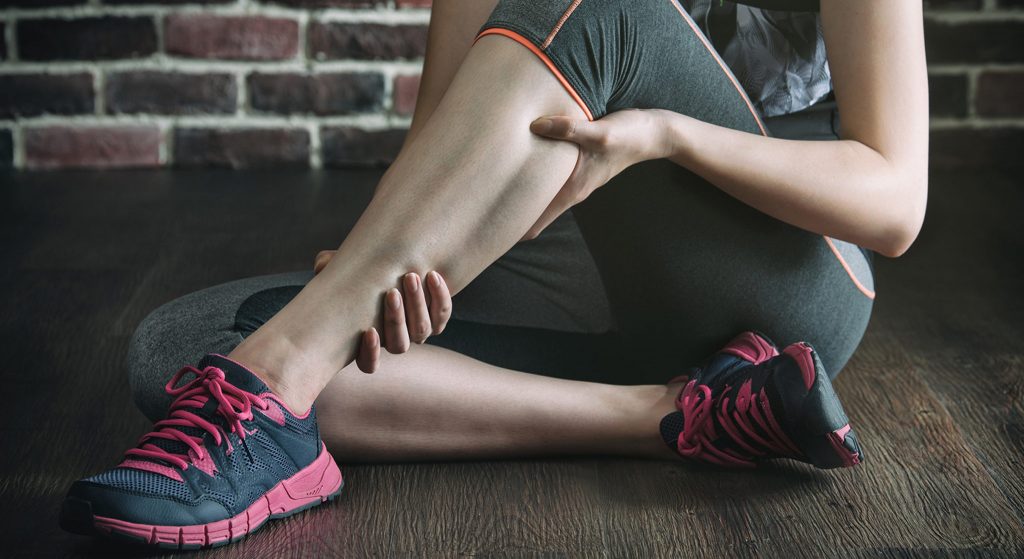
Calf Tears: Management of Calf Strains
Calf injuries are common in sports involving running, acceleration or changes in direction such as football, basketball and hockey. Runners are at particular risk of calf tears as the muscles are a primary source of shock absorption and propulsion during running.
The calf muscles are at the beg of the leg and run from the back of the knee to the back of your heel. They consists of 2 muscles:
- Gastrocnemius
- Soleus
Calf strains can range from a partial tear whereby there is minimal pain and minimal loss of function, to the more extreme and rare complete ruptures which may require surgical intervention. Prompt treatment of a strained calf can help to speed recovery and minimise the symptoms.
What are the Symptoms of a Calf Tear?
- A sudden sharp pain or pulling sensation at the back of the lower leg during exercise.
- May feel like you have been hit in the leg and potentially hear a “pop”.
- May only experience the sensation of a deep recurrent cramp with activity that eases with rest.
- Pain on stretching the muscle.
- Difficulty walking properly or standing on toes.
- Inability to hop on the injured leg.
- Swelling and bruising may be present.
- If the rupture is severe a gap in the muscle belly may be felt.
Severity of Calf Tears:
Calf strains may be minor or very severe. Strains are broadly graded 1, 2 or 3 depending on severity:
- Grade 1: The muscle is overstretched or overloaded beyond its capacity causing small micro tears in the muscle fibres.
- Grade 2: There is partial tearing of muscle fibres.
- Grade 3: This is the most severe calf strain with complete tearing or a rupture of muscle fibres in the lower leg.
What is the Acute Management of a Calf Tear?
It is vitally important that treatment for a strained calf starts immediately following injury. The most important phase for treatment is the first 48 hours post-injury. Early management will have you back on the field faster. Suggestions for immediate treatment of a strained calf include:
- Stop your activity.
- Unload the injured tissue with relative rest.
- Avoid exercise, heat and alcohol in the first 48 hours, as these can all exacerbate swelling and tissue damage.
- Early strengthening exercises have been shown to reduce time lost from sports.
Physiotherapy Provides Rehabilitation and Support
Physiotherapy treatment will depend upon the severity of the injury. The success rate of treatment is largely dictated by patient compliance. Treatments may include:
- Manual therapy- soft tissue therapy is excellent for reducing inappropriate scar adhesions while promoting faster healing conditions.
- Management primarily involves rehabilitation and strengthening exercises to rebuild the strength of the injured muscle.
- A progressive speed, agility and power program that prepares you for your sport is the best chance to ensure a successful outcome and full return to your pre-injury status.
- Correction of any predisposing biomechanical stressors and muscle imbalances.
Inadequate rehabilitation commonly results in recurrent injury.
Preventing a Calf Strain
Suggestions to prevent calf strains:
- It is important to warm up appropriately before training or competition. This should consist of some light aerobic exercise followed by dynamic, sports specific drills, e.g.Football Australia Perform +
- One of the most important methods of preventing a calf tear is to increase the strength of the calf muscles. Consult with one of our physiotherapists for a suitable hamstring strengthening program. A calf tear is far more likely in athletes who have weak calf muscles that don’t meet the demands of their sport or activity.
- Adequate load progression with training/competition has been highly indicated for injury reduction, that is, not doing too much too quickly. Our physiotherapists can guide your training program to limit the effects of inappropriate load management.
- Include calf muscle maintenance in your workout routine (e.g. massaging, stretching, foam roller).
- Ensure correct footwear is worn as poor-fitting/overused shoes can lead to poor biomechanics.
If you would like further information on management of a hamstring strain contact one of the physiotherapists at Jubilee Sports Physiotherapy who can guide you in your rehabilitation.